
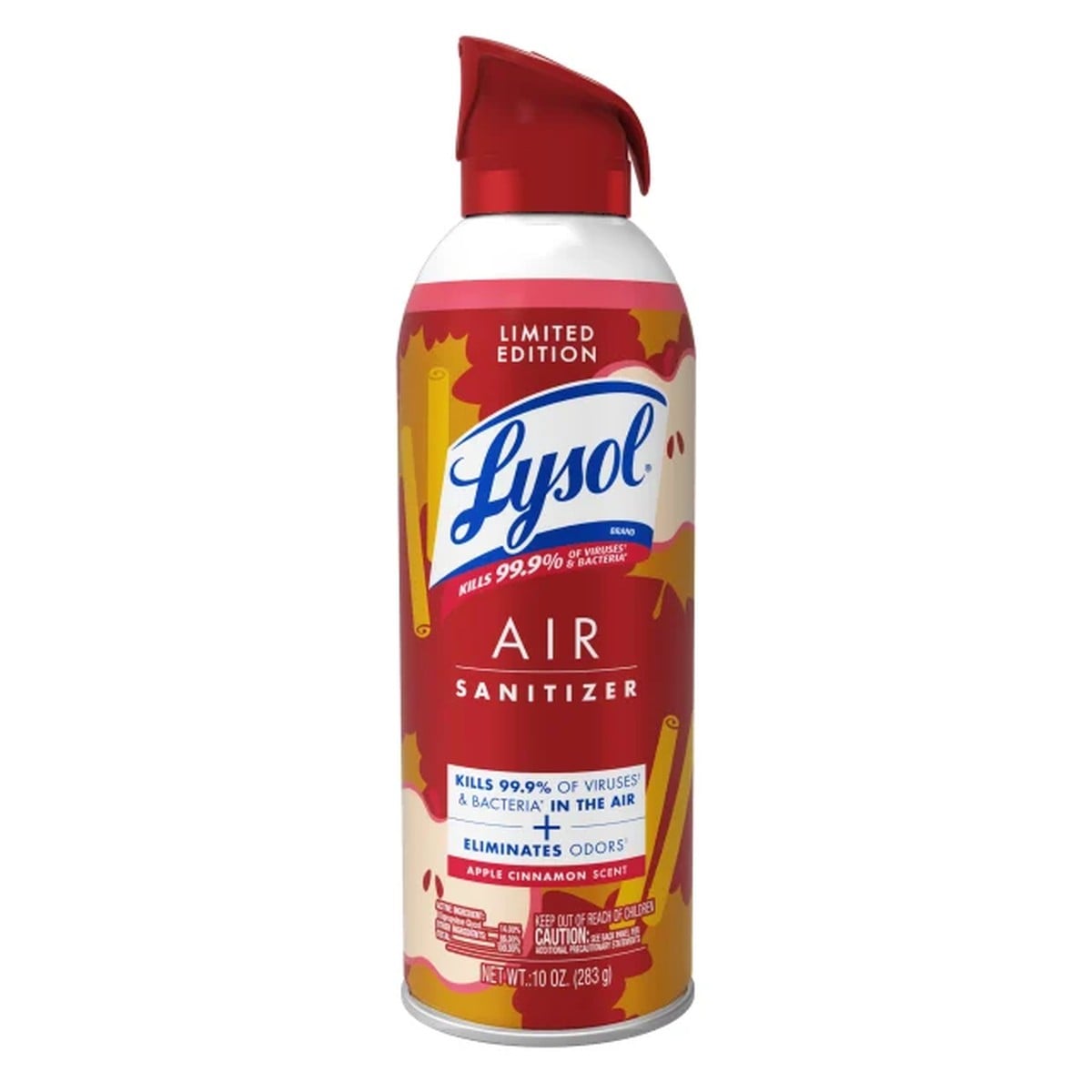
The Lysol Air Sanitizer Kill Claim Has Fine Print Most People Never Read
Lysol Air Sanitizer carries a claim no other spray on the shelf can make: it is the only EPA-registered product that claims to kill 99.9% of bacteria and viruses in the air. That is a real registration, EPA Reg. No. 777-143, not marketing language. I read the full label so you don’t have to, and the part that matters is the part almost nobody follows.
What the Lysol Air Sanitizer kill claim actually requires
The label lays out a specific protocol, and every step is a condition of the claim:
- Shake the can well before each use.
- Close or cover all doors, windows, air vents, and returns. Only the person spraying should be in the room.
- Hold the can upright and spray continuously for 30 seconds toward the center of the room and ceiling, in a sweeping motion. The defined room is 10 by 10 by 8 feet, about 800 cubic feet.
- Leave the room. Four minutes for the bacteria claim, twelve minutes for the virus claim.
- After the contact time, ventilate: open the doors and windows, uncover the vents and returns.
For larger spaces, up to 4,000 cubic feet, you repeat the 30-second spray in the center of each 800-cubic-foot section, with a maximum of five sprays per day.
The organisms behind the numbers: 99.9% of Staphylococcus aureus and Klebsiella pneumoniae in the air within 4 minutes, and 99.9% of airborne viruses, tested against the MS2 surrogate for enveloped airborne viruses such as influenza, coronaviruses, and pneumoviruses, within 12 minutes.
The way most people use Lysol Air Sanitizer is a different product, legally speaking
Here is the part that gets glossed over. The label has a second, separate direction for deodorizing: spray in the air for 5 seconds. That’s it. The quick spritz most of us do while walking through the living room is the deodorizing use. It smells fresh. It does not carry the kill claim.
So if you are spraying Lysol Air Sanitizer like an air freshener with people sitting in the room, you are getting fragrance, not disinfection. There is nothing wrong with that, as long as you know which one you are buying. EPA’s own writeup on the registration draws the same line: the product is meant to supplement ventilation and filtration guidance, not replace it.
Air only, and it doesn’t linger
Two more pieces of fine print. The kill claim covers air only. There is no surface claim on Lysol Air Sanitizer, and the label states it has no residual effect once the room is reopened.
On safety: the active ingredient is dipropylene glycol at 14 percent, the signal word is CAUTION, and the listed hazard is moderate eye irritation. EPA ran a risk assessment for household and commercial use and found no unreasonable risk when Lysol Air Sanitizer is used as directed. Worth noting that the sprayer is in the room during the 30-second spray itself, then exits for the contact time.
My take, as someone who treats indoor air for a living
Products like Lysol Air Sanitizer have a legitimate place. But the hierarchy never changes: find the source, ventilate the space, filter the air. A spray can support those steps. It cannot substitute for them. I’ve written before about what actually improves indoor air quality, and the same principle applies here: start with the basics that run all day, not the can you reach for once.
That matters more in winter, when homes close up and complaints about stale, stuffy air rise. It is also the season when musty smells show up once the heat kicks on, which is a different problem with a different fix.
And a kill claim is only as good as the directions behind it. If you want what the front of the can promises, you have to do what the back of the can says.